

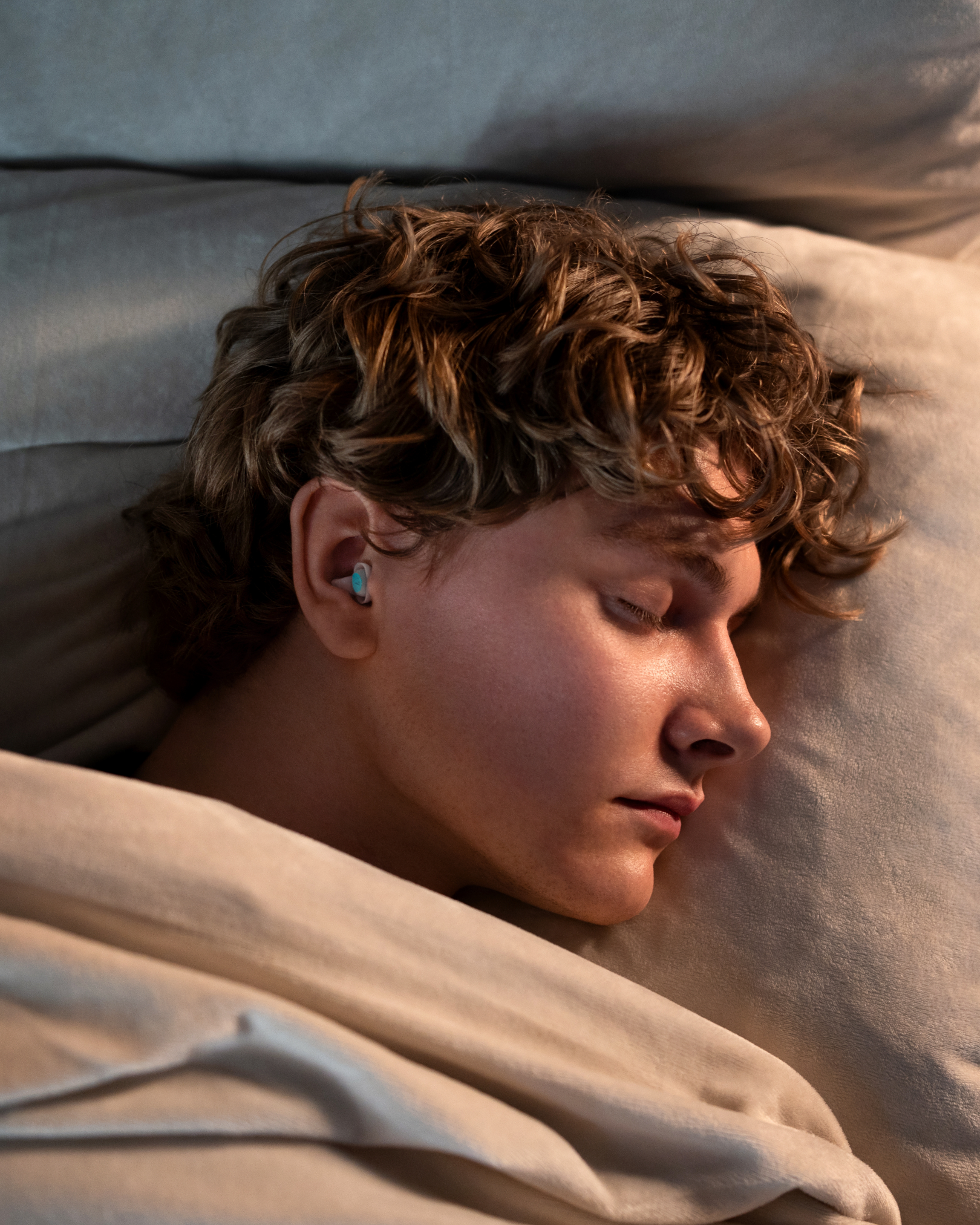
Many people with tinnitus struggle to sleep well. White noise is often mentioned as one option, but it does not work the same way for everyone. For some people, turning down disruptive environmental sounds may feel like the better move. In this blog, we explain what role earplugs and white noise can play when sleeping with tinnitus, and when it makes sense to reach out for professional advice.
Why tinnitus can make sleep difficult
What is tinnitus?
Tinnitus is the perception of a ringing, whooshing, humming, or other sound without a clear external source. What it sounds like can vary a lot from person to person. Because the sound is processed by the brain, it does not feel like something you can simply switch off. Tinnitus can be linked to hearing damage, stress, or other factors, and it can affect both sleep and concentration.
Why silence at night can feel louder
During the day, your brain takes in a lot of input, from conversations and traffic to music and background noise. At night, much of that falls away. Your attention can then shift more quickly to internal signals, like tinnitus. What fades into the background during the day can suddenly feel a lot more present when you are lying in bed.
The vicious circle of poor sleep
Poor sleep can increase stress and fatigue, which can make tinnitus feel more noticeable the next day. That can make it harder to fall asleep the following night. For some people, this creates a vicious circle of tinnitus and sleep problems.
Commonly mentioned advice, masking tinnitus with sound
White noise devices and sleep apps
White noise and other calming sounds are often used to make tinnitus less noticeable. They add a steady background sound. For some people, that feels helpful, especially when falling asleep.
Fans, music, and environmental sound
A fan, soft music, or nature sounds are also popular options. The difference often comes down to predictability. A steady sound feels different from music with variation or unexpected peaks.
Possible drawbacks of extra sound
Extra sound can help some people sleep more peacefully, but for others it can actually be disruptive. Some people sleep more lightly because of it or wake up feeling less rested. So more sound is not automatically the right call.
Why earplugs with tinnitus can feel contradictory
The fear that the ringing sounds louder
Many people worry that earplugs will make tinnitus more noticeable once environmental sound drops away. That concern is understandable, but it does not apply to everyone. The experience of tinnitus is tied to the way the brain processes signals.
Earplugs versus a noisy environment
Sleep earplugs are different from heavier hearing protection designed for very loud work environments. At bedtime, the goal is usually to reduce disruptive environmental sounds, not to block out every sound completely.
When earplugs are less suitable
Earplugs do not work the same way for everyone. If you have acute ear problems, pain, a sudden worsening of tinnitus, or significant anxiety symptoms, ask a doctor or audiologist for advice first. This blog is not medical advice and does not replace a professional consultation.

Reducing sound or adding sound, what is the difference?
How environmental sound can affect your sleep
Sudden sounds can cause brief moments of waking. These interruptions can disrupt deep sleep and get in the way of recovery.
Predictable calm or artificial sound
For some people with tinnitus, a calm and stable sleep environment feels better than constantly added sound. Fewer stimuli can help create a greater sense of quiet.
Habituation and the brain
In a calm and predictable environment, the brain can learn to put less focus on tinnitus. This process looks different for everyone, but predictability plays an important role for many people.
What researchers and audiologists say about tinnitus and sleep
Individual differences are decisive
There is no one-size-fits-all solution for sleeping with tinnitus. What feels helpful for one person can work against someone else.
Trying earplugs calmly
Do you find that environmental sound keeps you awake, or are you naturally a light sleeper? It may be worth discussing a short trial with sleep earplugs with your doctor or audiologist.
Fit and comfort are important
Pressure on the ear, especially for side sleepers, can make things worse. Poorly fitting earplugs can also create an occlusion effect, which may make internal sounds seem clearer. That is why comfort and fit really matter.
How to test earplugs safely with tinnitus
1. Build up calmly
Start with short stretches, for example only while falling asleep. Do not wear earplugs all night right away, and pay attention to how your body responds.
2. Watch for these signals
Do not focus only on how quickly you fall asleep. Also pay attention to how rested you feel when you wake up and how your tinnitus feels. Improvement can be subtle and may only become noticeable after several nights.
3. Stop and ask for advice if this happens
Is your tinnitus clearly getting worse, are you in pain, or are you noticing new symptoms like anxious feelings? Stop and contact a doctor or audiologist.
Sleep solutions that take your hearing into account
What good sleep earplugs can offer
Good sleep earplugs are ideally soft, distribute pressure evenly, stay in place, and feel comfortable for side sleepers. Comfort is key for a restful night.
Why specially developed sleep earplugs are different
Specially developed sleep earplugs, such as Alpine SleepDeep, are designed to reduce pressure on the ear and bring down environmental sound without blocking it out completely. They are intended as a support for rest, not as a medical treatment.
Work on a personal sleep approach for tinnitus
Many people mix and match different solutions, sometimes earplugs, sometimes soft sound, and adjust based on what works for them. A doctor or audiologist can help you find an approach that fits your tinnitus and your sleep needs.

