It can be frustrating to watch the person next to you fall asleep easily while you're still struggling to get comfortable. However, it’s definitely possible to catch a few hours of sleep during your flight. Preparation is key, so you can arrive at your destination feeling well-rested. Below, we’ve listed the best tips for sleeping better on the plane!
#1. Take your destination's time zone into account
If you're flying to a different time zone, it's a good idea to start adjusting your routine a few days before your flight. If there’s a significant time difference between your current time zone and your destination, consider booking an overnight flight. Leaving in the evening increases your chances of sleeping on the plane. Ideally, a direct flight is best for catching some rest, though that’s not always possible. If you need to switch planes, try to sleep on the longer leg of the journey rather than the shorter one.
#2: Select your seat in advance
Most airlines allow you to reserve your seat ahead of time. A window seat is a great choice if you want to sleep, as you’ll have something to lean against and are less likely to be disturbed. However, if you need to use the restroom frequently or have circulatory issues that require you to get up and stretch your legs, an aisle seat might be a better fit. Seats in the emergency exit row often offer more legroom, but they may have limited recline options — something to consider if you have long legs.
#3: Buy the right earplugs
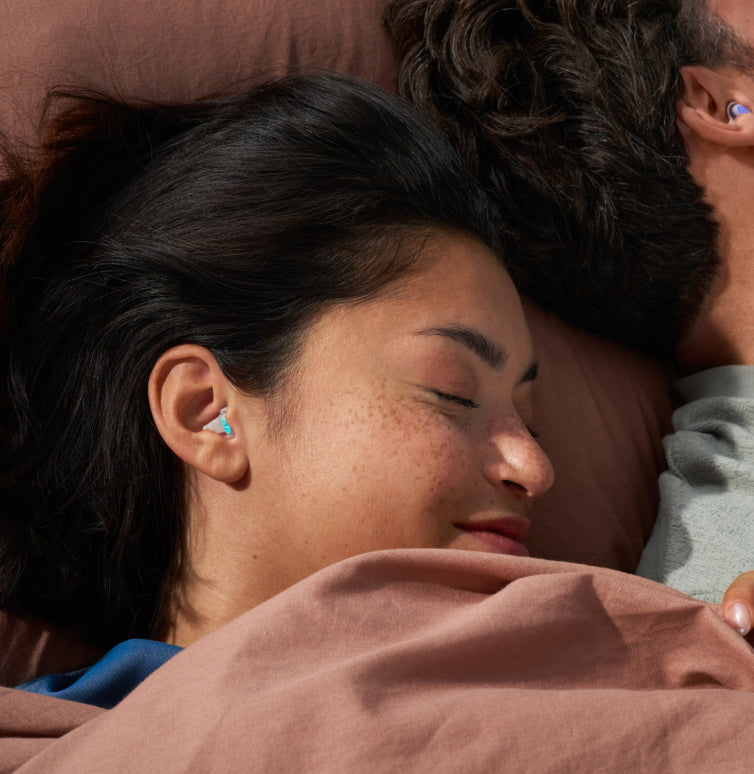
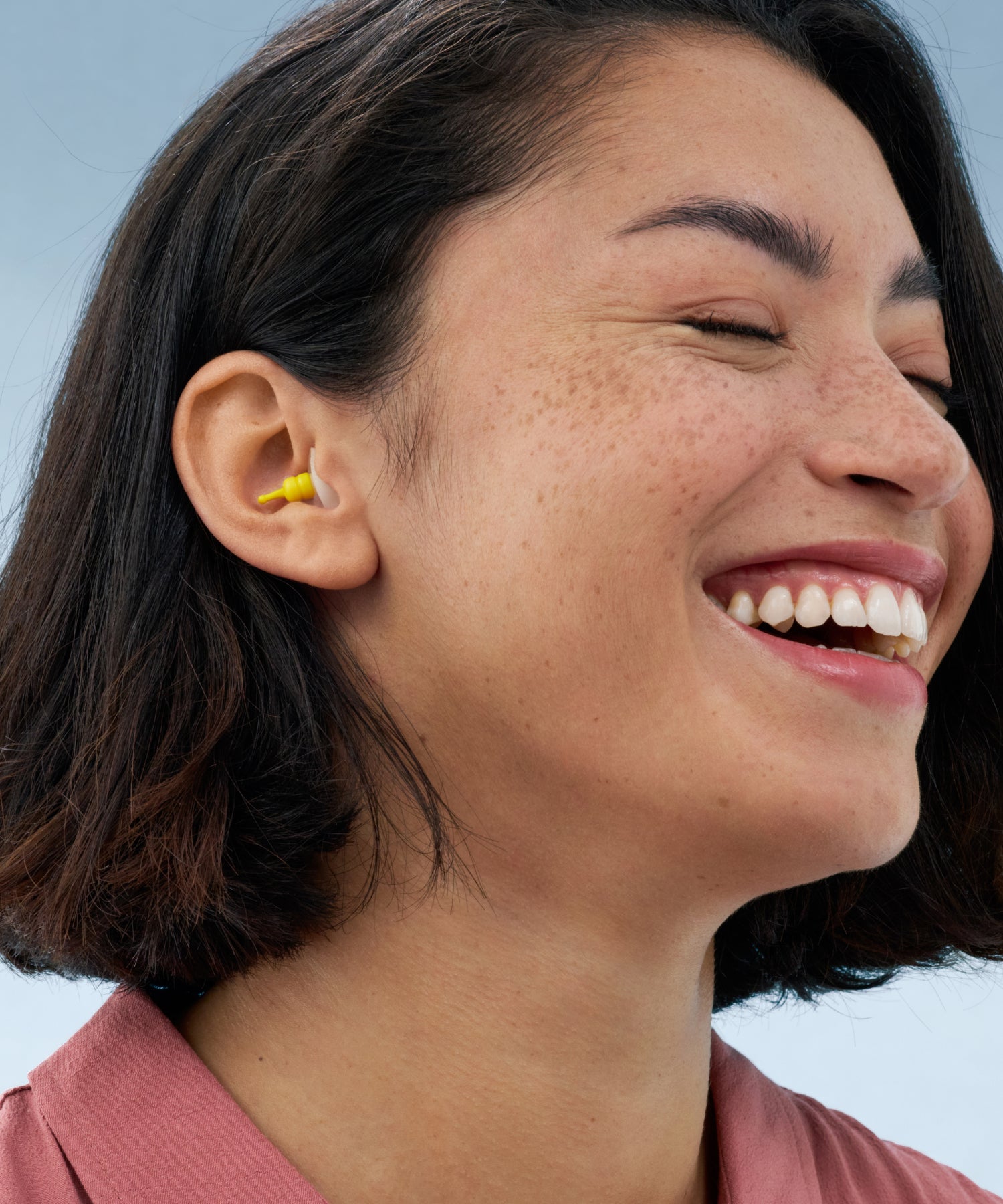
Alpine offers several airplane earplugs in its range. Take our FlyFit earplugs, for example. These feature special pressure-regulating filters that help control the pressure on your eardrum, preventing discomfort or pain during ascent and descent. In addition to pressure regulation, they provide mild noise attenuation, reducing monotonous background sounds like engines and ventilation while still allowing you to hear important announcements from the flight crew. If you travel frequently by plane, it’s worth considering custom-made FlyFit earplugs, which let you choose from different levels of noise reduction.
You could also consider our sleep earplugs. These offer higher attenuation, which is ideal for blocking out noisy passengers or crying babies. Bear in mind that sleep earplugs do not feature the pressure-regulating filters that the FlyFit earplugs have.
#4. Put together your own sleep kit
As well as suitable earplugs, there are some other items you'll want to keep on hand to ensure a comfortable flight. Take some time to put together your personal sleep kit. You'll find it really helpful once you're on the plane! Some suggestions:
- Earplugs
- Sleep mask
- Neck pillow
- Earbuds or headphones (noise-cancelling)
- Blanket
The rest depends on your personal preferences. Some people, for example, take a small bottle of lavender oil with them. Applying a drop to your temples or wrists can be very relaxing.
#5: Wear comfortable clothes
Most importantly, make sure you dress as comfortably as possible. You’ll sleep much better when you’re not wearing tight, uncomfortable clothes and can snuggle up in a soft, oversized hoodie. Layering is a smart choice, as it makes it easy to add or remove clothing based on your comfort level. A large scarf (also known as a blanket scarf) is also ideal during a flight. It’s totally fine to take off your shoes when you nap, as long as you put on slippers or wear clean socks. Speaking of socks— a pair of compression socks is highly recommended. Many people experience swollen, tired, and/or painful legs while flying due to long periods of sitting. Compression socks are designed to promote blood circulation and help prevent these issues.
#6: Watch what you drink...
It is important to drink enough on a plane, as the dry air can quickly dehydrate you. Dehydration can cause fatigue, headaches, and can even worsen your jet lag. Also pay attention to what you drink, both before and during the flight. While caffeine and alcohol may be tempting, they’re not ideal if you want to sleep on the plane. It's best to avoid sugary soft drinks, as they can interfere with your sleep. Opt for herbal tea or water instead.
#7: ... and what you eat
What you eat just before and during the flight can also affect your sleep. Try to avoid fatty and heavy meals. You can bring your own food, but be aware that certain countries require you to declare it at customs. To stay on the safe side, check the airline's regulations in advance and bring only unopened packages.
Are you flying while it is night-time at your destination? Then it's better to avoid eating during the flight until it's time for breakfast in your new time zone. Research has shown that this makes it easier for your body to adapt.
#8: Do relaxation exercises
Getting to the airport on time, hauling suitcases, checking in, going through customs, waiting, and finally boarding... sometimes everything goes smoothly, but it can also be stressful. Once you're in your seat after a few stressful hours, it can be hard to get into sleep mode. Find out in advance which relaxation techniques work best for you. Simple breathing exercises or progressive muscle relaxation can work wonders. You can also find online videos with stretches and yoga routines specifically designed for doing on the plane.
#9. Maintain your normal bedtime routine as much as possible
Try to do the same things you normally do before going to sleep, such as brushing your teeth, cleaning your face, taking out your contact lenses and reading a book. Sticking to your usual bedtime routine will help your body and mind recognise that it is time to relax. As you probably know, blue light from screens can disrupt your sleep. Therefore, it is recommended that you turn off your electronic devices (such as smartphones, tablets and laptops) well before you plan to sleep.
#10. Make sure your seatbelt is visible
In general, your seatbelt should only be fastened during take-off and landing. However, unexpected turbulence can occur at any time, and in such cases, all passengers must have their seatbelts on. Therefore, before you doze off, make sure your seatbelt is fastened and visible — over your blanket or clothing — so that the cabin crew can see it. This way, they won’t need to wake you up in the event of turbulence.